How AI-Powered Nutrition Tracking Transforms Sleep Quality and Recovery
AI nutrition tracking reveals hidden connections between your meals and sleep quality. Learn how NutriAI's inflammation scoring helps optimize recovery through better food choices.
Photo by NutriAI.
Your sleep quality isn't just about your mattress or room temperature. The meals you eat throughout the day create a cascade of inflammatory responses that either support deep, restorative sleep or keep your nervous system on high alert well past bedtime.
AI-powered nutrition tracking reveals these hidden connections by analyzing the inflammatory load of every meal and correlating it with your sleep patterns and recovery metrics. Unlike generic sleep apps that focus only on duration and movement, intelligent nutrition platforms like NutriAI examine how specific foods trigger inflammation that disrupts circadian rhythms, delays sleep onset, and reduces sleep quality.
The result? You discover which foods are sabotaging your recovery—and which ones actively promote better sleep.
How Inflammation Disrupts Your Sleep Cycle
Inflammatory foods don't just cause digestive discomfort. They trigger systemic inflammation that interferes with your body's natural sleep-wake cycle in three critical ways.
First, inflammatory cytokines like IL-6 and TNF-alpha suppress melatonin production. When you eat highly processed foods, refined sugars, or foods you're sensitive to, your immune system releases these inflammatory markers. They directly inhibit the pineal gland's ability to produce adequate melatonin, making it harder to fall asleep and achieve deep sleep phases.
Second, inflammation activates your sympathetic nervous system. This keeps your body in a state of physiological stress, elevating cortisol levels when they should naturally decline in the evening. The result is that "tired but wired" feeling where your body is exhausted but your mind won't shut off.
Third, inflammatory foods disrupt gut health, which affects sleep through the gut-brain axis. Your gut produces about 90% of your body's serotonin—a precursor to melatonin. When inflammation damages gut lining integrity, serotonin production drops, further compromising your sleep quality.
Why Traditional Sleep Tracking Misses the Mark
Most sleep tracking focuses on outputs: how long you slept, how many times you woke up, how much REM sleep you got. But these metrics tell you what happened, not why it happened.
Traditional sleep apps might show you had poor sleep efficiency last night, but they can't tell you it was because the inflammatory load from your 3 PM processed snack was still affecting your nervous system eight hours later.
This is where AI-powered nutrition tracking changes the game. By analyzing the inflammatory potential of every meal and snack, you can identify the dietary inputs that predict poor sleep outcomes.
How NutriAI Connects Your Meals to Sleep Quality
NutriAI's inflammation scoring system grades every meal from A+ to F based on its inflammatory load. This isn't just calorie counting—it's analyzing ingredients, processing levels, additives, and your personal food sensitivities to predict how each meal will affect your inflammatory status.
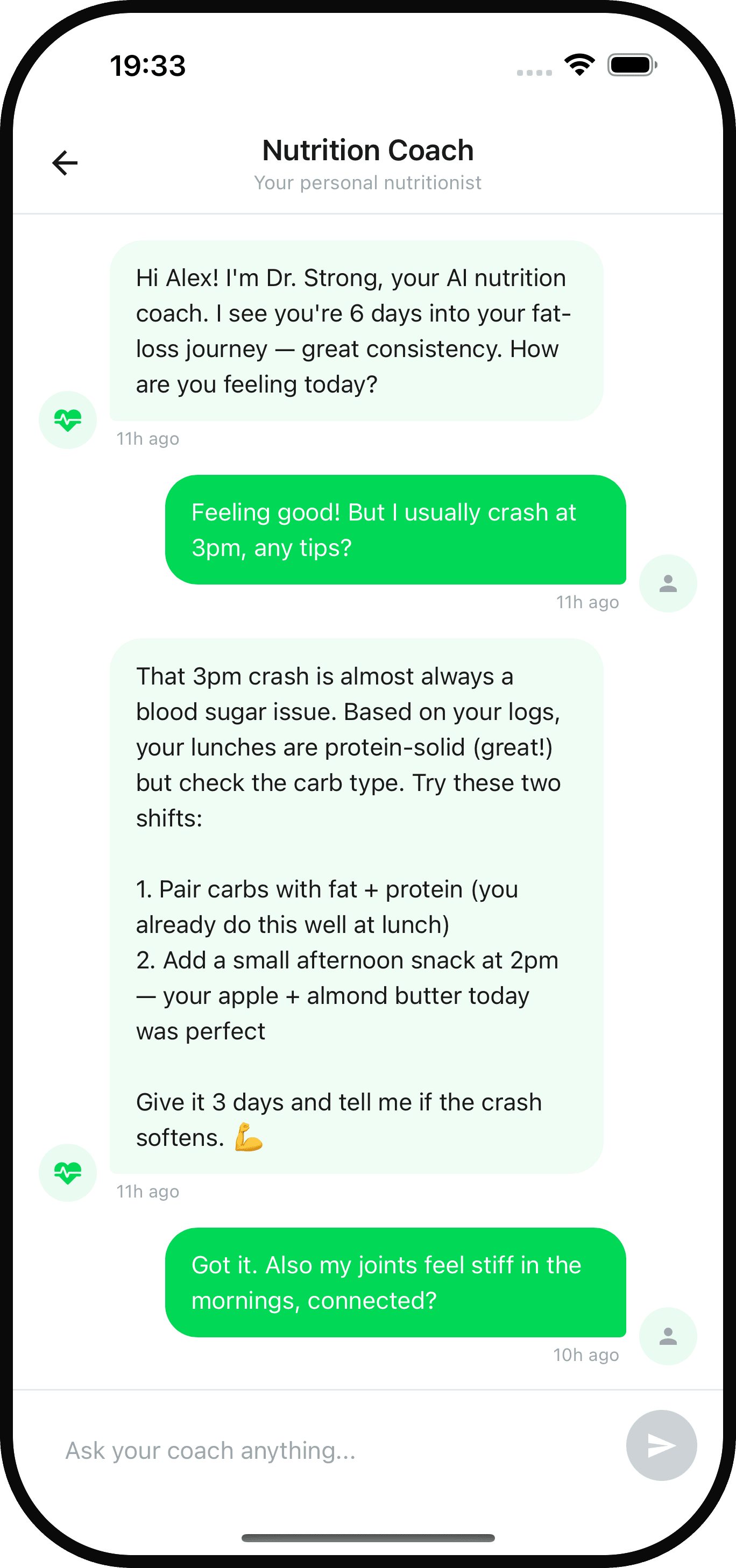
The AI coach tracks patterns between your daily inflammation scores and your subjective sleep ratings. Over time, you'll see clear correlations: days with multiple C or D-grade meals correlate with poor sleep ratings, while days dominated by A-grade, anti-inflammatory meals predict better recovery.
Here's what makes this approach powerful: the AI doesn't just track correlation, it provides actionable swaps. If you scan a late-night snack that grades poorly for inflammation, the coach immediately suggests an anti-inflammatory alternative that supports sleep rather than disrupting it.
The system also considers meal timing. Eating inflammatory foods close to bedtime creates a double hit—the inflammatory response peaks just when your body should be winding down for sleep.
The Science Behind Meal Timing and Sleep
Research from the Institute for Functional Medicine shows that meal timing affects circadian rhythm regulation as much as light exposure. Eating inflammatory foods within three hours of bedtime disrupts the natural decline in core body temperature that signals sleep readiness.
Late-night eating, especially of processed foods, also triggers a glucose spike followed by a crash. This blood sugar roller coaster activates stress hormones like cortisol and adrenaline—the opposite of what you want before bed.
Anti-inflammatory foods eaten earlier in the day support better sleep through multiple mechanisms:
- Tryptophan-rich foods like grass-fed turkey and pumpkin seeds provide building blocks for serotonin and melatonin
- Magnesium-dense foods like leafy greens and nuts support nervous system relaxation
- Omega-3 fatty acids from wild-caught fish reduce inflammatory cytokines that interfere with sleep
- Polyphenol-rich foods like berries and green tea support healthy circadian rhythms
Building Your Sleep-Optimized Nutrition Strategy
The most effective approach combines real-time meal analysis with pattern recognition over time. Here's how to use AI nutrition tracking to optimize your sleep:
Track inflammation scores consistently. Scan every meal and snack, paying attention to how the AI grades different food combinations. Notice which meals consistently score A or A+ versus those that grade C or below.
Monitor meal timing. The AI coach will flag when you're eating inflammatory foods too close to bedtime. Aim to finish eating at least three hours before sleep, with your last meal grading A- or better.
Identify personal trigger foods. Your inflammation response to specific foods is individual. The AI learns your patterns and will warn you when foods that consistently disrupt your sleep appear in your meal scans.
Experiment with anti-inflammatory swaps. When the AI suggests alternatives to inflammatory foods, try them and track the impact on your sleep quality over the following nights.
Use symptom correlation. Rate your sleep quality each morning and let the AI identify which dietary patterns predict your best and worst sleep nights.
What to Expect in Your First 30 Days
Week one typically reveals the most obvious culprits—late-night processed snacks, inflammatory cooking oils, or foods you're sensitive to. You'll see immediate improvements in sleep onset time by eliminating these.
Weeks two and three show more subtle patterns. You might discover that your morning coffee choice affects evening sleep quality, or that certain "healthy" foods actually trigger inflammation in your system.
By week four, you'll have enough data for the AI to predict how dietary choices will affect your sleep. The system becomes proactive rather than reactive, warning you before inflammatory meals disrupt your recovery.
Most users report measurable improvements in sleep quality within 10-14 days of consistent tracking. The combination of eliminating inflammatory foods and optimizing meal timing creates a compound effect on sleep depth and recovery.
Your Next Step Tonight
Start by scanning your dinner and any evening snacks with NutriAI. Pay attention to the inflammation grades and timing recommendations. If anything grades C or below, ask the AI coach for an anti-inflammatory swap you can try tomorrow night instead.
The fastest way to transform your sleep isn't buying another sleep gadget—it's understanding how your food choices either support or sabotage your recovery. NutriAI makes these connections visible and actionable, turning every meal into an opportunity to optimize your sleep quality.
Frequently asked questions
- How quickly will I see sleep improvements from tracking nutrition with AI?
- Most users notice better sleep onset and quality within 10-14 days of consistent meal tracking. The AI identifies inflammatory food patterns that disrupt sleep, and eliminating these foods typically shows results within the first week.
- Can NutriAI track how meal timing affects my sleep?
- Yes, NutriAI analyzes both the inflammatory load of your meals and their timing relative to bedtime. The AI coach will flag when you're eating inflammatory foods too close to sleep and suggest better timing for optimal recovery.
- What inflammation score should I aim for to support better sleep?
- Target A or A+ grades for meals within 4 hours of bedtime. The AI prioritizes anti-inflammatory foods rich in magnesium, tryptophan, and omega-3s that actively support sleep quality rather than disrupting it.
- Does NutriAI consider my personal food sensitivities when grading meals?
- Yes, the AI learns your individual inflammatory responses over time. Foods that consistently correlate with poor sleep or symptoms get flagged as personal triggers, even if they're generally considered healthy.
- How does inflammatory food affect sleep differently than just eating late?
- Inflammatory foods trigger cytokine release that suppresses melatonin production and activates stress hormones. This creates a physiological state incompatible with deep sleep, beyond just the digestive effects of late eating.